
On July 20, 2026, with the final batch of equipment debugging parameters confirmed, the 500kg/h fully automated potato chip production line in Peru successfully passed the overall line testing and officially entered the stable production stage. Currently, the entire production line is operating smoothly with stable capacity, and the potato chips produced exhibit excellent performance in terms of appearance, taste, and quality consistency. The successful delivery of the project not only helps the client enter into large-scale production but also further consolidates its competitive advantage in the local snack food market.
I.Project Background
As the demand for snack foods in Peru continues to grow, the customer’s existing potato chip production equipment has gradually shown limitations in terms of capacity, automation level, and overall efficiency.
Based on considerations of expanding production scale and enhancing product competitiveness, the customer decided to upgrade equipment and expand production capacity. The introduction of a 500kg/h fully automated potato chip production line aims to optimize the existing production process, improve the overall automation level, and achieve more efficient and stable continuous production . The following are the core parameters of this production line.

II . Project Configuration
The 500kg/h fully automated potato chip production line covers the entire process from potato washing, peeling, slicing to frying, seasoning, and finished product packaging, achieving integrated continuous production. The entire production line is highly automated with a high degree of integration of key equipment, which not only improves production efficiency but also ensures a stable output of high-quality potato chips.
The entire production line design emphasizes seamless process integration and high space utilization, and is planned strictly according to the client’s factory conditions .
Furthermore, the frying and blanching processes in this project utilize diesel heating, ensuring thermal efficiency and stable temperature control while being more suitable for local energy conditions and reducing operating costs.
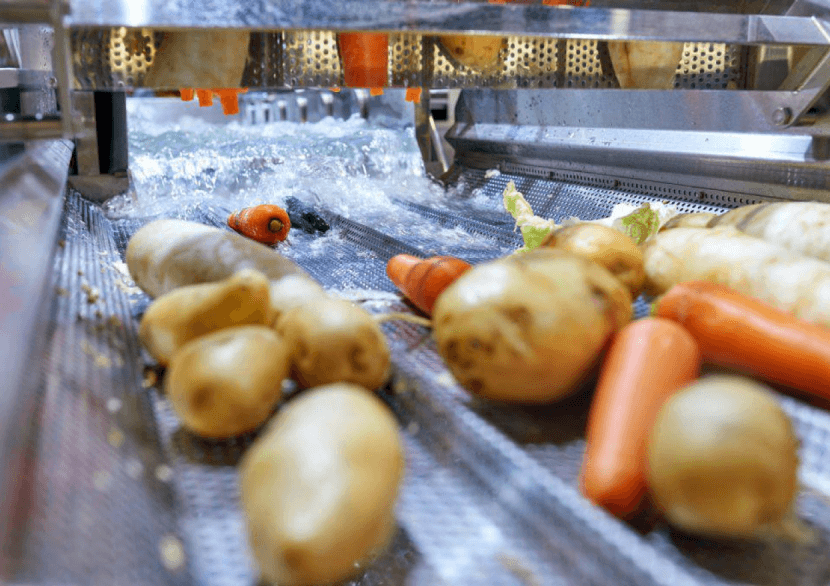
Potato washing and peeling machine: used to remove dirt and skin from the surface of potatoes, ensuring the cleanliness of the raw materials and laying a good foundation for subsequent processing.
Potato chip slicer: Cutting peeled potatoes into evenly thin slices is an important step that affects the taste of potato chips.
Blanching equipment: Removes excess starch through hot water treatment, prevents oxidation and discoloration, and improves taste.
Dehydration equipment: Removes moisture from the surface of potato chips, reduces oil splattering during frying, and improves the quality of the finished product.
Continuous fryer: Fries potato chips evenly to achieve a crispy texture and golden color.
Oil removal equipment: Removes excess oil through centrifugation or vibration, making products healthier and fresher.
Automatic seasoning machine: Adds seasonings evenly, making potato chips have a consistent flavor and better taste.
Automated packaging equipment: performs quantitative packaging and sealing, improving production efficiency and extending product shelf life.

II. Installation Site
After the equipment arrived at the customer’s factory, Baixin Machinery arranged for an experienced engineering team to carry out the installation and commissioning work on-site, according to the customer ‘s needs. The entire 500kg/h fully automatic potato chip production line project took approximately 15 days from installation to commissioning, and the process proceeded smoothly and efficiently.
On-site, engineers rationally laid out and installed the equipment based on the client’s factory space and production needs, and simultaneously completed the commissioning and trial operation of the entire production line. After multiple rounds of testing, the production line operated stably, with smooth connections between all links, and ultimately successfully met the conditions for production launch.
Meanwhile, during the installation and commissioning period, engineers also provided basic training to the customer’s operators to ensure that they could operate the equipment proficiently and prepare for stable production in the future.